

Hockey season is back! Learn the 5 most common youth hockey injuries, simple ways to lower injury risk, and how physiotherapy at Motion Works Orleans can help young athletes recover and stay on the ice.
Why Is Hockey Tough on Young Bodies?
Hockey combines speed, sudden changes in direction, and thousands of repetitive strides and shots. Falls, collisions with other players or the boards, and impacts from pucks and sticks all add to the risk. Kids are also still growing. Developing bones, growth plates, muscles, and ligaments make certain injuries more common in young athletes. The good news? Spotting the signs early and getting the right care can stop a small problem from becoming a season-ending one.
.
.
.
.
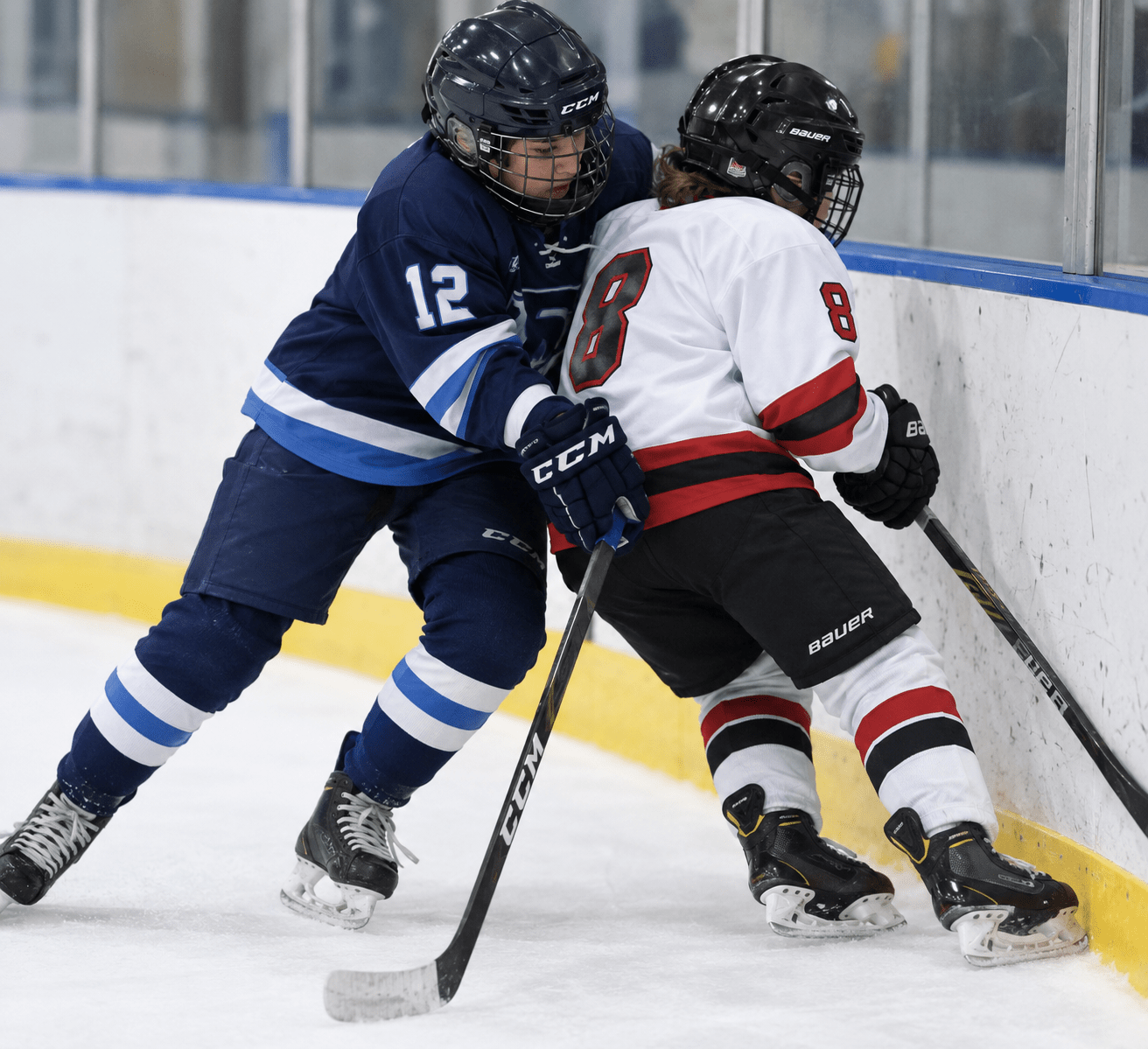
The 5 Most Common Youth Hockey Injuries:
- Concussions. A concussion is a mild traumatic brain injury caused by a bump, blow, or jolt to the head or body that makes the brain move rapidly inside the skull. It's the most common hockey injury and can follow falls, collisions with players or boards, or a puck to the head. Watch for headaches, dizziness, nausea, and trouble concentrating. Any suspected concussion means removal from play and a medical assessment before returning to the ice. Our physiotherapists also offer concussion rehabilitation to help kids feel like themselves again.
- Shoulder injuries. Falls and collisions can cause collarbone fractures, shoulder dislocations, and shoulder separations. Pain, swelling, bruising, or difficulty moving the arm are signs to get checked.
- Hip and groin injuries. Repetitive skating can lead to muscle strains, groin pain, and growth plate injuries. Some goalies also develop femoroacetabular impingement (FAI), which can cause hip pain and stiffness.
- Knee injuries. Sudden direction changes, twisting, and collisions can sprain ligaments like the MCL. Swelling, a wobbly or unstable feeling, and difficulty walking or bending the knee are red flags.
- Wrist injuries. Falling onto outstretched hands, repeated stick handling, and puck impacts can cause fractures, sprains, and ligament injuries. Pain, swelling, or a weaker grip shouldn't be brushed off.
Good to know: if your child can't put weight on a limb, has an obvious deformity, or has severe swelling after a fall, see a physician or visit an emergency room first. We're happy to help with recovery afterward.
How Can Physiotherapy Help Young Hockey Players?
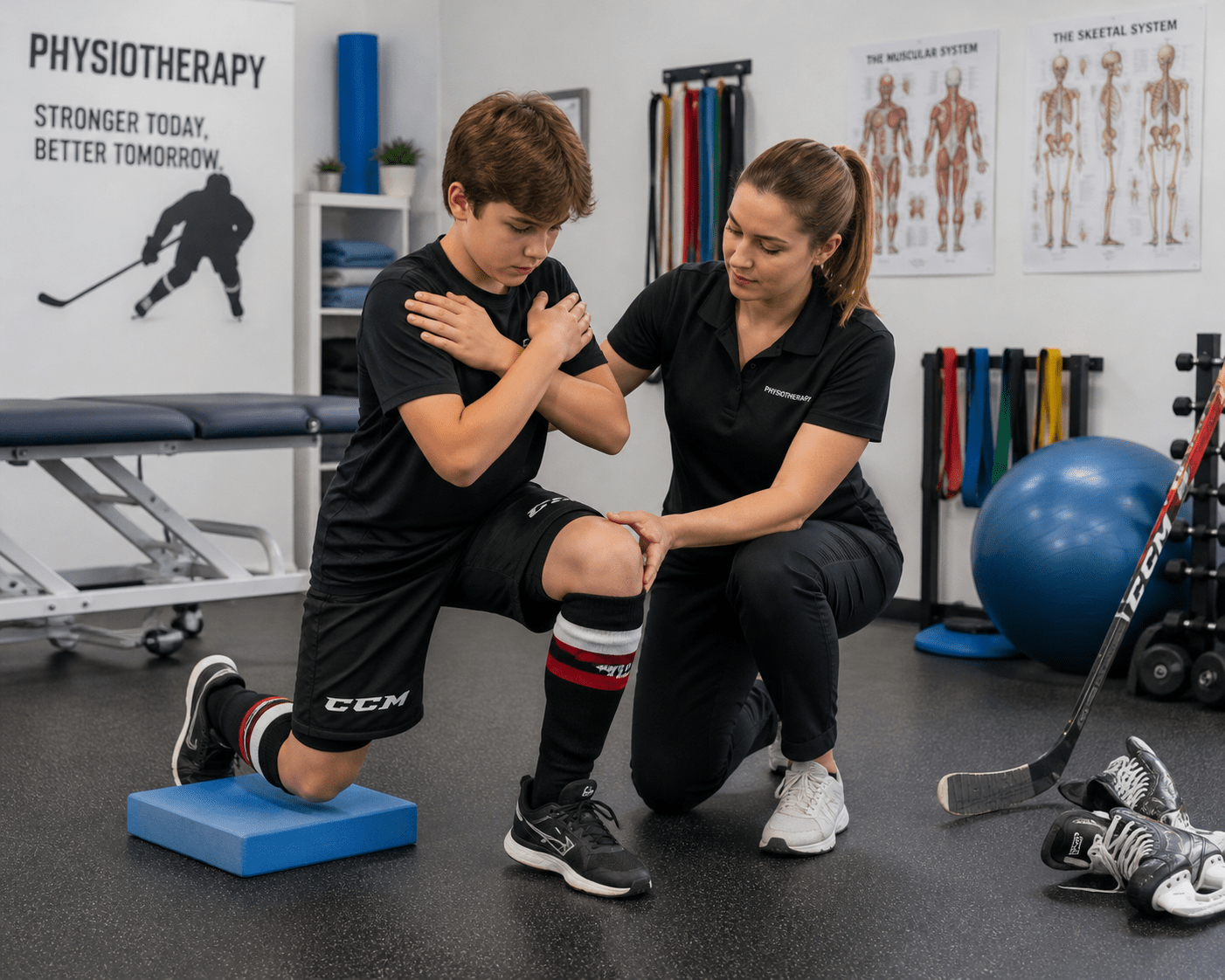
Physiotherapy isn't only for after an injury. It can also help your athlete get stronger and move better before problems start. At our Orleans clinic, our physiotherapists tailor care to your child's age, injury, and goals through:
- Personalized rehabilitation: an assessment to find weakness or limited movement, then a plan built around your child.
- Pain management: hands-on techniques, movement strategies, and heat, ice, or other therapeutic modalities when appropriate
- Restoring movement: stretching and joint mobility work to bring back range of motion for everyday life and for hockey.
- Strength and conditioning: targeted exercise for the hips, knees, and shoulders, plus balance and coordination for skating and contact.
- Injury prevention education: movement mechanics, dynamic warm-ups, training loads, and recovery tips.
- Confidence during recovery: realistic goals, encouragement, and progress tracking so your athlete returns to the game feeling ready.
Learn more about our children's physiotherapy services and sports injury treatment and prevention.
.
.
.
.
.
.
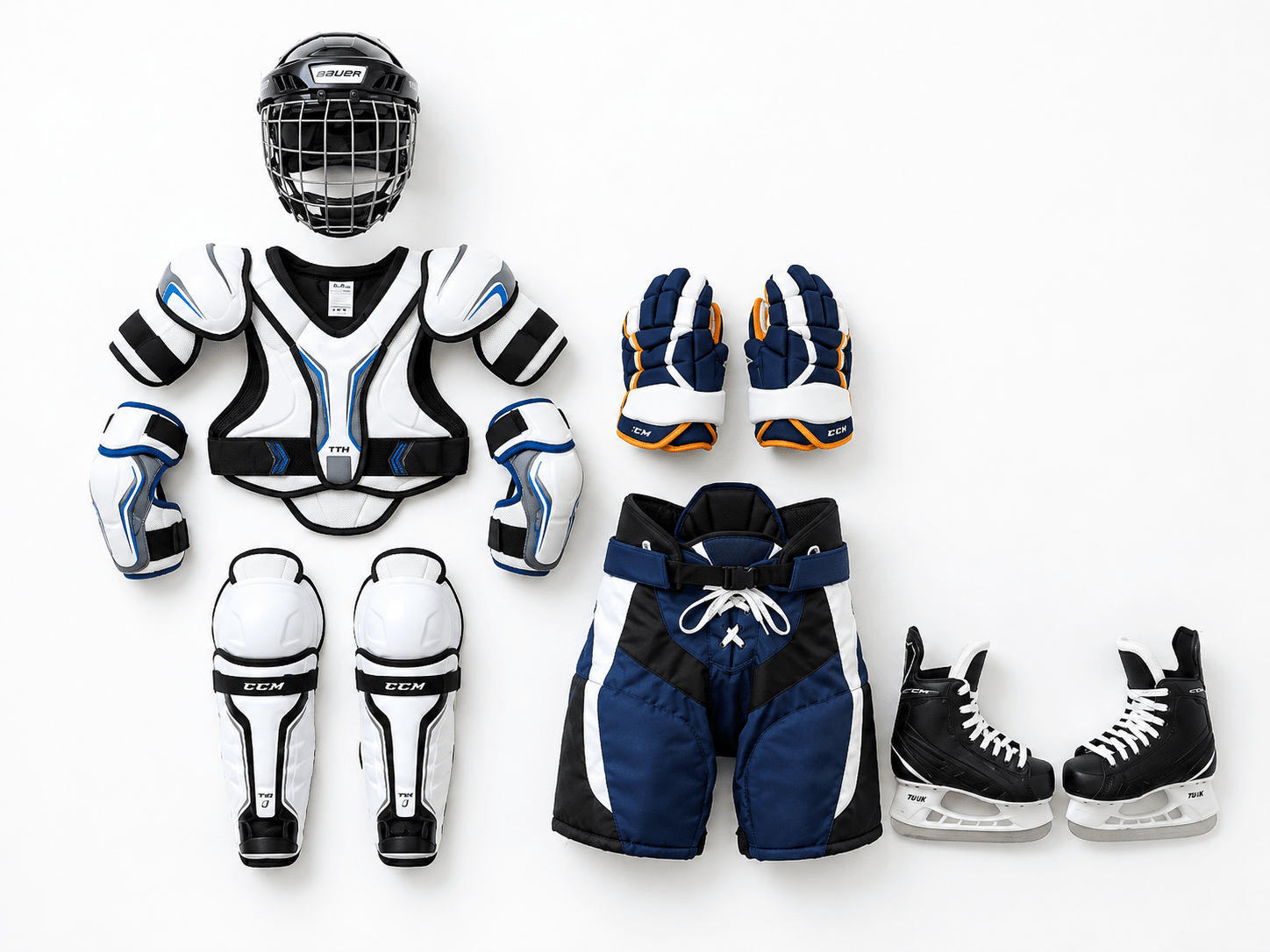
3 Ways to Reduce Hockey Injury Risk:
Injuries can't always be prevented, but a few simple habits help young athletes stay safer on the ice.
- Check the gear. Helmets and protective equipment should fit properly, meet safety standards, and be rechecked as your child grows. Hockey helmets should be CSA certified, and damaged or expired equipment should be replaced according to the manufacturer's guidelines. Not sure about your child's helmet? Look for the CSA certification label.
- Warm up before the ice. Ten minutes of dynamic movement, like lunges, squats, and controlled side-to-side shuffles, prepares muscles and joints for skating, accelerating, and changing direction. Parent tip: turn it into a game in the arena lobby and your child may not even notice they're warming up.
- Build in balance and rest. Age-appropriate strength training, a mix of sports and activities, rest days, and gradual increases in training load all help prevent overuse injuries and support long-term development.
Book an Assessment!
Whether your child is recovering from a bump, nursing a sore wrist, or just wants to feel stronger for the season, our physiotherapists are here to help families in Orleans, Navan, and across Ottawa. Our team at Motion Works Physiotherapy in Orleans is here to keep your young athlete healthy, active, and on the ice. Contact us today!